
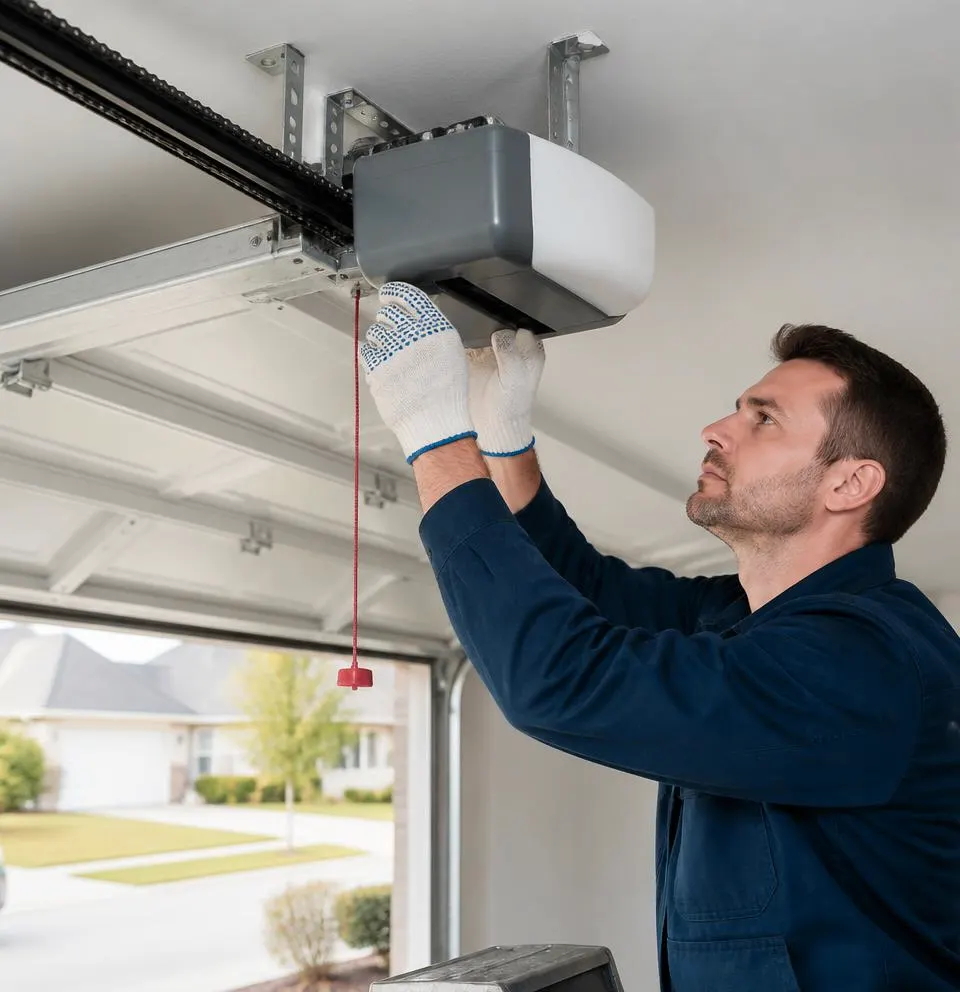
Grinding usually means worn rollers or a stripped opener gear. Squealing usually means dry hinges or worn roller bearings. Popping usually means temperature-driven metal movement or spring tension shifting. Rattling usually means loose hardware or slack in the opener chain. The noise itself narrows the problem fast — but where it happens, when it happens, and how often tells you which cause you're actually dealing with.
Grinding: Metal-on-Metal Along the Track
Grinding sounds like metal scraping metal, usually loudest as the door travels along one section of track rather than evenly across the whole cycle. It often gets worse in winter, when road salt and slush spray onto the lower track and rollers.
- Rollers first. A technician checks these first because they're the most common cause and the easiest to inspect. Nylon rollers crack and flatten with age; steel rollers lose their bearings and start riding unevenly. Years of ice and salt exposure speed this up on homes that keep a car in the driveway through Illinois winters.
- Track alignment next. A bent or misaligned track — from an impact, ice buildup, or a door that's been forced shut — creates a pinch point where rollers grind instead of rolling freely.
- Opener gear last. On chain-drive openers, a stripped internal gear produces a grinding sound at the motor housing itself, separate from anything happening at the door. This is checked last because it's less common but requires opening the unit to confirm.
The fix depends on the cause: roller replacement is straightforward and affordable, track realignment requires loosening and resetting mounting brackets, and a stripped gear means replacing that internal part or, if the opener is old, replacing the unit.
Squealing: High-Pitched Sound on Movement
Squealing is a thinner, higher sound than grinding, and it's often most noticeable on the first open of a cold morning, then quiets down as the door warms up and moves.
- Lubrication first. This is the most common cause and the first thing checked. Hinges, rollers, and the torsion spring all need a silicone or lithium-based garage door lubricant periodically. Dust, pollen, and summer humidity followed by dry winter air strip lubricant faster than most homeowners expect.
- Worn rollers next. If lubrication doesn't quiet the sound, metal rollers with failing bearings will keep squealing no matter how much grease goes on, because the bearing itself is worn rather than dry.
- Spring friction last. Torsion springs that rub against their shaft or end brackets without adequate lubrication can squeal, especially during the sharp temperature swings common in spring and fall.
The fix is usually simple: a thorough lubrication pass on all moving parts. If that doesn't resolve it, roller replacement is next. Spring-related squealing should be evaluated by a technician rather than lubricated by a homeowner, since springs are under high tension.
Popping: A Sharp, Single Sound
Popping is different from grinding or squealing — it's usually one sharp sound rather than a continuous noise, and it can happen even when the door isn't moving, especially overnight during a fast temperature drop.
- Thermal movement first. Metal track, panels, and brackets expand and contract with temperature. A rapid swing — common here as a mild fall day drops into a cold night — can cause a pop as components settle. This is usually harmless.
- Spring tension next. A popping sound during opening or closing can mean a torsion spring coil shifting or settling under stress. This is checked after thermal causes are ruled out, since spring issues often come with other symptoms like a door that feels heavier or closes unevenly.
- Loose hardware last. A bolt or bracket that's slightly loose can flex under the door's weight and snap back with a pop each cycle, particularly on older installations that haven't had hardware checked in a while.
If popping is a one-off on a cold night, it's rarely worth a service call. If it repeats every time the door opens or closes, or comes with sagging, uneven movement, or a door that's suddenly hard to lift, treat it as a spring warning sign and get it inspected before the spring fails completely.
Rattling: Vibration Across the Whole Door
Rattling feels different from the other three — it's less a single noise and more a shake that runs across the whole door surface, often loudest during windy weather or storms.
- Loose hardware first. Bolts and screws on hinges, track brackets, and the opener rail back out gradually from the vibration of normal daily cycles. This is the first and most common thing checked.
- Worn rollers or bearings next. If tightening hardware doesn't stop the rattle, worn rollers can create vibration throughout the door's travel rather than at one spot.
- Opener chain or belt tension last. A chain-drive opener with a slack chain will rattle against the rail, especially during wind gusts that shake the whole door assembly, a familiar sound during spring storm season.
The fix for hardware is usually a simple tightening pass with a wrench across every bracket and hinge. Chain tension is adjustable at the opener unit. Persistent rattling after both are addressed usually points back to rollers.
When to Call Fox Lake Garage Door
A single pop on a cold night or occasional squeak isn't an emergency. But grinding that doesn't improve with lubrication, popping that repeats on every cycle, or a door that rattles hard enough to feel unsafe are signs to get it looked at. Our Garage Door Maintenance visits cover lubrication, hardware tightening, and roller inspection in one pass, which catches most of these noises before they turn into a failed spring or a stuck door. If a noise shows up suddenly along with a door that won't open or close at all, our Emergency Garage Door Service covers that kind of urgent call.
If your garage door in Fox Lake, Round Lake, Ingleside, Spring Grove, McHenry, Antioch, Grayslake, or Wauconda has started making noise you can't explain, call Fox Lake Garage Door and we'll track down the cause before it becomes a bigger repair.