
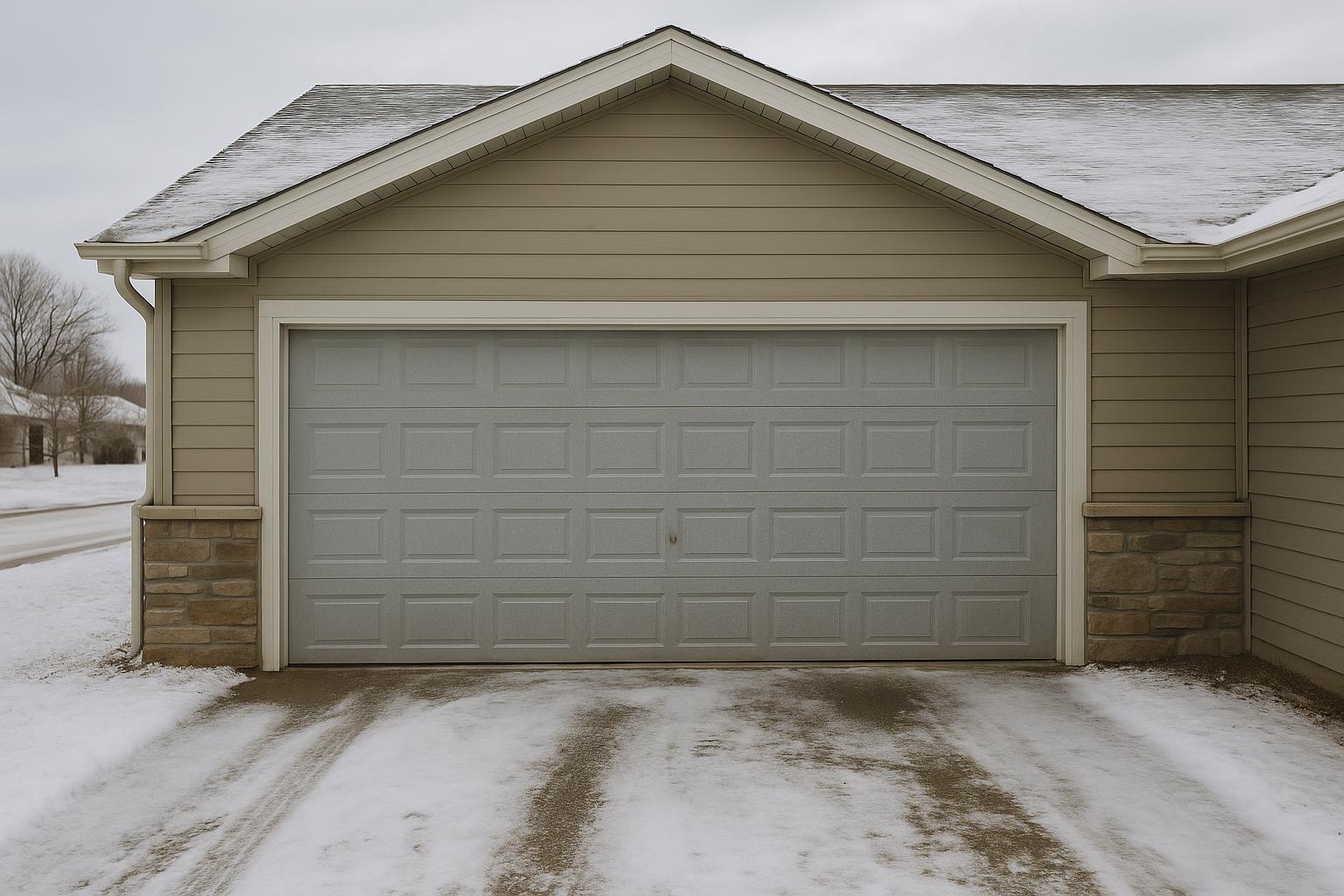
Winter Is Tough on Garage Doors in Fox Lake
If you've lived in Fox Lake for even one winter, you know how brutal the cold can get. Temperatures regularly dip below zero, wind chills make it feel even worse, and the freeze-thaw cycle can last for months. While most homeowners think about their furnace, pipes, and roof when preparing for winter, there's one critical part of your home that often gets overlooked: your garage door.
Your garage door is the largest moving part of your home, and it's directly exposed to the elements. Cold weather affects nearly every component — from the springs and tracks to the opener and weatherstripping. Understanding how winter impacts your garage door can help you avoid unexpected breakdowns, costly repairs, and the frustration of being stuck in your driveway on a freezing morning.
How Freezing Temperatures Affect Garage Door Springs
Garage door springs do the heavy lifting every time you open and close your door. They're under enormous tension, and cold weather makes the metal contract and become more brittle. This is why garage door spring failures spike during the winter months.
When temperatures drop, the metal in torsion and extension springs loses some of its flexibility. A spring that was already nearing the end of its lifespan may snap without warning on a cold morning. If you hear a loud bang coming from your garage, that's often the sound of a spring breaking.
What You Can Do
- Have your springs inspected before winter arrives. A professional can assess their condition and estimate remaining lifespan.
- Apply a garage door-specific lubricant to the springs to help them move smoothly in cold weather. Avoid WD-40 — use a silicone-based or lithium-based spray instead.
- If a spring breaks, do not attempt to replace it yourself. The tension involved makes this one of the most dangerous DIY garage door repairs. Call a professional.
Your Garage Door Opener Works Harder in the Cold
Electric garage door openers are designed to operate within a certain temperature range. When it gets extremely cold, the lubricant inside the motor can thicken, making the opener work harder to lift the door. At the same time, the door itself may feel heavier to the opener because the springs have lost some of their lifting power in the cold.
You might notice your opener straining, moving more slowly, or even failing to open the door completely. In some cases, the opener's safety features may kick in and stop the door mid-cycle because it detects too much resistance.
What You Can Do
- Keep your garage door balanced. If the door is hard to lift manually, your opener is fighting the same battle. A balance test — lifting the door halfway and seeing if it stays — can reveal problems early.
- Check the opener's force settings. Sometimes a minor adjustment can help the opener handle the increased resistance, but be careful not to override safety features.
- Consider upgrading to a belt-drive or DC motor opener if your current unit is old. Newer models handle temperature extremes much better.
Frozen Garage Doors: When Your Door Won't Budge
One of the most common winter complaints we hear from homeowners in Fox Lake and surrounding areas like Round Lake and Spring Grove is that their garage door is frozen to the ground. When water collects along the bottom seal and freezes overnight, the door can literally become stuck to the garage floor or driveway.
Forcing the door open — either manually or with the opener — can tear the bottom weatherstripping, damage the door panels, or burn out the opener motor.
What You Can Do
- Use a heat gun or hair dryer to carefully melt the ice along the bottom of the door. Work slowly and evenly.
- Apply a thin layer of cooking spray or silicone lubricant along the bottom seal to prevent water from bonding the seal to the concrete.
- Keep the area where the door meets the ground clear of snow and standing water.
- If your door freezes shut regularly, it may be time to replace the bottom weatherstrip with a newer, more cold-resistant material.
Weatherstripping and Seals Deteriorate Faster in Winter
The rubber and vinyl seals around your garage door are your first line of defense against cold air, moisture, snow, and pests. Unfortunately, cold temperatures cause these materials to harden, crack, and shrink over time. Once your weatherstripping fails, you'll notice cold drafts in the garage, higher energy bills, and possibly water or snow getting inside.
For homeowners in the Fox Lake area who use their garage as a workshop, storage space, or have living space above it, damaged weatherstripping can make a real difference in comfort and energy costs.
What You Can Do
- Inspect the seals along the bottom, sides, and top of your garage door at least once a year — ideally before winter.
- Replace any weatherstripping that is cracked, brittle, or no longer making full contact with the door frame.
- Bottom seals are relatively inexpensive and can be replaced quickly by a professional.
Metal Tracks and Hardware Can Contract and Misalign
The metal tracks that guide your garage door can contract slightly in extreme cold. While this may sound minor, even a small shift can cause the door to bind, stick, or move unevenly. You might hear scraping or grinding noises, or the door may appear crooked as it opens and closes.
Nuts, bolts, and brackets can also loosen over time as the metal expands and contracts through repeated temperature cycles. This is especially common in areas like McHenry, Antioch, and Ingleside where winter temperatures can swing dramatically within a single week.
What You Can Do
- Visually inspect the tracks for gaps, bends, or debris. Wipe them clean and apply lubricant.
- Tighten any loose hardware, but be careful not to overtighten — the brackets need a small amount of play.
- If the door is visibly misaligned or making unusual noises, call a technician before the problem gets worse.
A Pre-Winter Maintenance Checklist
The best way to avoid winter garage door problems is to schedule a professional maintenance visit before the cold sets in. Here's what a thorough pre-winter inspection should include:
- Spring tension test and lubrication
- Opener performance check and force adjustment
- Track alignment and cleaning
- Weatherstripping inspection and replacement if needed
- Hardware tightening
- Safety sensor testing
- Balance test
At Fox Lake Garage Door, we recommend annual maintenance for every garage door, and scheduling it in the fall gives you the best chance of getting through winter without any surprises.
Don't Wait for a Breakdown
Winter garage door problems rarely fix themselves, and they almost always get worse with time. A sticking door becomes a frozen door. A weakened spring becomes a broken spring. A drafty seal becomes a flooded garage floor.
If you're in Fox Lake or any of the surrounding communities and your garage door isn't performing the way it should, don't wait until you're stuck in the cold. Give us a call and let us make sure your garage door is ready for whatever winter throws at it.