
Your Garage Door Shouldn't Sound Like That
You press the button, and instead of a smooth, quiet operation, your garage door groans, screeches, or rattles its way up the track. If you're a homeowner in Fox Lake, you've probably experienced this at least once — especially after a long winter or years of daily use. While it's tempting to ignore the noise and hope it goes away, strange garage door sounds are almost always a sign that something needs attention.
The good news is that most noises have identifiable causes, and many can be resolved before they turn into expensive repairs. Let's break down the most common garage door noises, what they mean, and what you should do about each one.
Grinding or Scraping Sounds
A grinding or scraping noise is one of the most alarming sounds a garage door can make. It usually indicates metal-on-metal contact somewhere in the system, and it should never be ignored.
Common Causes
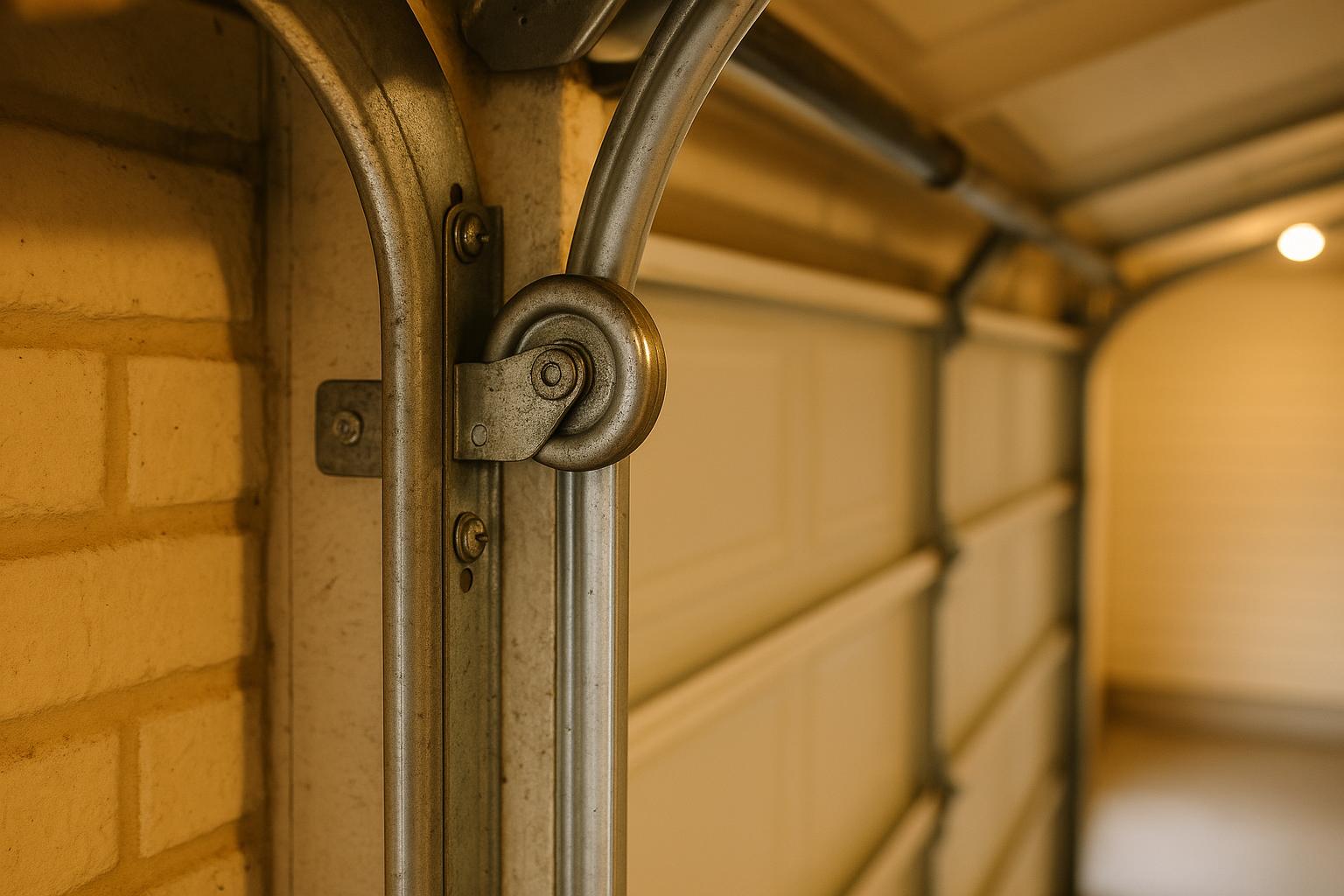
- Worn or misaligned rollers: Over time, the rollers that guide your garage door along the tracks can wear down. Metal rollers are especially prone to grinding as they age. If the rollers are cracked, chipped, or have lost their smooth surface, they'll scrape against the tracks with every cycle.
- Bent tracks: If a track has been bumped by a car, lawnmower, or heavy object, even a slight bend can cause the door to drag and grind as it moves through the damaged section.
- Lack of lubrication: Dry metal components create friction. Without regular lubrication, the hinges, rollers, and bearings will start grinding against each other.
What to Do
Start by visually inspecting the tracks for any obvious bends or obstructions. If the tracks look straight, the rollers are likely the culprit. Nylon rollers are a great upgrade from metal ones — they're quieter and require less maintenance. If you're not comfortable diagnosing the issue yourself, a professional inspection can pinpoint the problem quickly.
Squealing or Squeaking Noises
A high-pitched squeal every time your garage door opens or closes is more than just annoying — it's a cry for maintenance.
Common Causes
- Dry hinges and springs: The torsion springs, extension springs, and hinges on your garage door need periodic lubrication. When they dry out, the metal parts squeal under the tension and movement.
- Worn bearings: The bearings in the rollers and at the top of the torsion spring shaft can wear out over time. When they do, they produce a persistent squealing sound.
- Weatherstripping friction: Sometimes the rubber weatherstripping along the bottom or sides of the door can create a squeaking sound as the door moves past it, especially if it has hardened or shifted out of position.
What to Do
Apply a garage door-specific lubricant (not WD-40, which is a solvent, not a lubricant) to the springs, hinges, rollers, and bearing plates. A silicone-based or lithium grease spray works best. Many Fox Lake homeowners find that a quick lubrication session twice a year eliminates squealing entirely. If the noise persists after lubrication, the bearings or springs may need professional replacement.
Popping or Snapping Sounds
If you hear a loud pop or snap when your garage door operates, pay close attention. This type of noise can indicate a serious issue.
Common Causes
- Torsion spring adjustment issues: When the torsion springs are improperly balanced or beginning to fatigue, they can produce a popping sound as they struggle to manage the door's weight.
- Panels shifting: Loose or damaged panels can pop or snap as they flex during operation, especially if the hardware connecting them has loosened over time.
- Broken spring: A sudden, loud bang — almost like a gunshot — coming from your garage usually means a torsion spring has snapped. This is a serious safety concern. Do not attempt to operate the door if you suspect a broken spring.
What to Do
If you hear occasional light popping, check the door's hardware and tighten any loose bolts or brackets. However, if you hear a loud snap or the door suddenly feels extremely heavy, stop using it immediately and call a garage door professional. Spring replacement is dangerous and should always be handled by a trained technician.
Rattling or Vibrating Noises
A rattling garage door often sounds worse than it is, but it still deserves your attention.
Common Causes
- Loose hardware: Your garage door has dozens of nuts, bolts, screws, and brackets. Over hundreds of cycles, vibration can loosen these fasteners, causing the door to rattle as it moves.
- Loose chain or belt on the opener: If you have a chain-drive garage door opener, a loose chain will slap and rattle during operation. Belt-drive openers can also develop slack over time.
- Unsecured opener mounting: If the garage door opener unit itself isn't firmly mounted to the ceiling, the entire assembly can vibrate and create a rattling echo throughout the garage.
What to Do
Grab a socket wrench and go over all the visible hardware on the door — hinges, brackets, track mounts, and roller brackets. Tighten anything that feels loose. Check the opener chain or belt tension according to the manufacturer's instructions. If the opener is vibrating excessively, make sure the mounting bracket is secure and consider adding vibration-dampening pads between the bracket and the ceiling.
Humming or Buzzing Without Movement
If your garage door opener hums or buzzes but the door doesn't move, the motor is engaging but something is preventing the door from responding.
Common Causes
- Stripped gear in the opener: The main drive gear inside the opener can strip over time, especially in older units. The motor runs, but the gear can't transfer power to the chain or belt.
- Door is locked or obstructed: Sometimes the manual lock has been engaged accidentally, or something is physically blocking the door from moving.
- Broken spring: Without functioning springs to counterbalance the door's weight, the opener motor alone cannot lift it. The motor will hum under the strain but the door won't budge.
What to Do
First, check that the manual lock isn't engaged and that nothing is blocking the tracks. If the door is clear and still won't move, disconnect the opener using the emergency release cord and try lifting the door by hand. If it's extremely heavy, you likely have a broken spring. If the door lifts easily by hand but the opener still won't drive it, the opener's internal gear is probably stripped and the unit will need to be serviced or replaced.
When to Call a Professional
Some garage door noises can be solved with a can of lubricant and a wrench. Others point to problems that require professional tools, training, and replacement parts. As a general rule, you should call a garage door technician if:
- You suspect a broken or failing spring
- The door is visibly off-track or crooked
- Noises persist after lubrication and hardware tightening
- The opener motor runs but the door won't move
- You hear a sudden loud bang from the garage
Ignoring these issues can lead to further damage, higher repair costs, or even safety hazards for your family.
Keep Your Garage Door Running Quietly in Fox Lake
Your garage door is one of the most-used moving parts in your home — opening and closing an average of 1,500 times per year. That kind of wear and tear is going to produce some noise eventually, but you don't have to live with it. Regular maintenance, timely repairs, and knowing when to call for help will keep your garage door operating smoothly and quietly for years to come.
If your garage door has started making noises that concern you, Fox Lake Garage Door is here to help. We diagnose the problem, explain your options, and get your door back to quiet, reliable operation — no guesswork involved.