
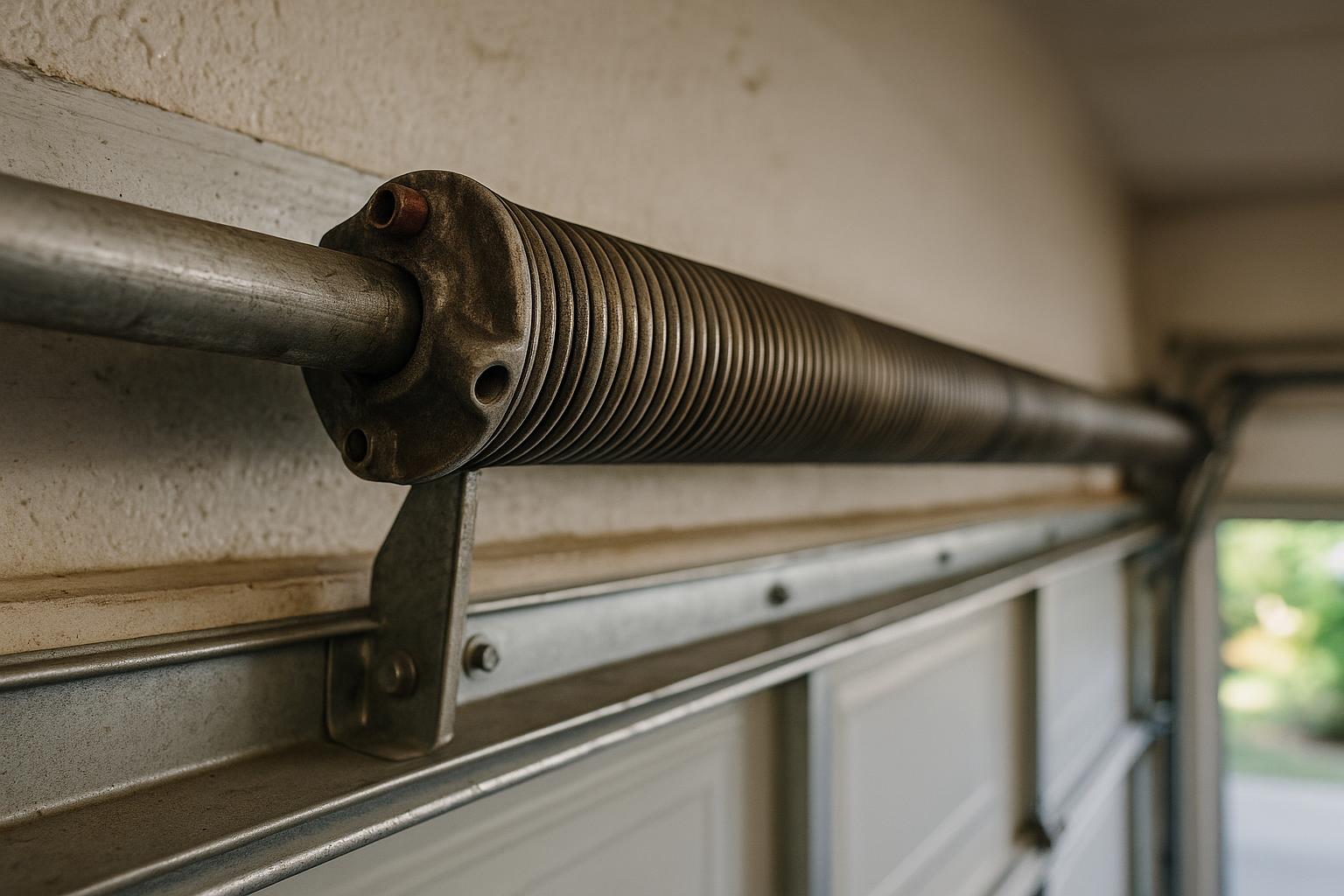
Your Garage Door Springs Are Working Harder Than You Think
Every time you open or close your garage door, the springs do the heavy lifting — literally. A standard residential garage door weighs between 130 and 350 pounds, and the springs are responsible for counterbalancing all of that weight. Your garage door opener simply guides the door along its track, but the springs provide the actual force needed to raise and lower it safely.
Most homeowners in Fox Lake don't think about their garage door springs until something goes wrong. But springs are one of the most stressed components of your entire garage door system, and they have a finite lifespan. Recognizing the warning signs of failing springs can save you from an unexpected breakdown, a safety hazard, or a much more expensive repair down the road.
How Long Do Garage Door Springs Last?
The average torsion spring is rated for approximately 10,000 cycles. One cycle equals one full open and one full close. If your household opens and closes the garage door four times a day, that adds up to roughly 1,460 cycles per year — meaning your springs could wear out in about seven years.
Families that use the garage as their primary entrance may cycle the door even more frequently, shortening that lifespan further. Factors like temperature fluctuations, humidity, and lack of maintenance also accelerate wear. Here in Fox Lake, where we experience everything from brutal winters to humid summers, springs are under extra stress throughout the year.
7 Warning Signs Your Springs Are Failing
1. The Door Feels Heavier Than Usual
If your garage door feels noticeably heavier when you try to lift it manually, the springs are losing their tension. A properly balanced door should feel relatively light — you should be able to lift it with one hand. If it takes significant effort, the springs are no longer doing their job.
2. The Door Opens Unevenly or Crooked
When one spring weakens faster than the other (in a two-spring system), the door may rise unevenly, tilting to one side. This puts additional strain on the tracks, rollers, and opener, and it can cause the door to get stuck partway up. If you notice your door looking crooked as it opens, don't ignore it.
3. You Hear Loud Squeaking or Grinding
Some noise is normal, but excessive squeaking, grinding, or popping sounds during operation can indicate that the springs are wearing out. Metal fatigue causes the coils to lose their smooth movement, creating friction and noise that weren't there before.
4. The Door Slams Shut Quickly
Healthy springs control the speed at which your door closes. If the door drops faster than normal or slams shut, the springs have lost the tension needed to manage the door's weight on the way down. This is a serious safety concern, especially if you have children or pets.
5. There's a Visible Gap in the Spring
Take a look at the torsion spring mounted above your garage door. If you see a visible gap or separation in the coils, the spring has already broken. A broken spring will have a clear space where the coil has snapped apart. Even if the door still operates with one functioning spring, running it in this condition puts extreme stress on your opener and the remaining spring.
6. The Opener Struggles or Stops Mid-Cycle
Your garage door opener is designed to work in partnership with the springs. When springs weaken, the opener has to compensate by working harder. You may notice the motor straining, the door stopping partway, or the opener shutting off due to overload protection. Many homeowners assume the opener is the problem, but worn springs are often the real culprit.
7. The Door Won't Stay Open
If you open your garage door manually and it won't stay in the halfway position — instead sliding back down — the springs can no longer hold the door's weight. This is a straightforward balance test that any homeowner can perform, and it's one of the clearest indicators that spring replacement is needed.
Why You Should Never Replace Garage Door Springs Yourself
We understand the DIY spirit that many Fox Lake homeowners have, but garage door spring replacement is one job that should always be left to professionals. Here's why:
- Extreme tension: Torsion springs are wound under tremendous force. A spring that releases unexpectedly can cause severe injury or even death.
- Specialized tools required: Proper spring replacement requires winding bars, clamps, and precise calibration tools that most homeowners don't have.
- Incorrect installation risks: Springs that are wound too tightly or too loosely will cause the door to operate improperly, potentially damaging other components or creating a safety hazard.
- Warranty concerns: Many garage door and opener warranties are voided if non-professional repairs are performed.
A trained technician can replace your springs safely, calibrate the tension correctly, and inspect the rest of your system for any related wear — all in about an hour.
Should You Replace One Spring or Both?
If your garage door has two torsion springs and one breaks, we strongly recommend replacing both at the same time. The reasoning is simple: both springs were installed at the same time and have endured the same number of cycles. If one has failed, the other is likely close behind.
Replacing both springs together costs only marginally more than replacing one, and it saves you from paying for a second service call in the near future. It also ensures that both springs have equal tension, which keeps your door balanced and operating smoothly.
How Regular Maintenance Extends Spring Life
While springs will eventually wear out no matter what, proper maintenance can extend their lifespan significantly. Here are a few things that help:
- Lubrication: Apply a silicone-based garage door lubricant to the springs every few months. This reduces friction and prevents rust, which weakens the metal over time.
- Balance checks: Periodically disconnect the opener and manually lift the door to the halfway point. If it stays in place, the springs are properly balanced. If it drifts up or down, it's time for an adjustment.
- Professional inspections: An annual maintenance visit from a qualified technician can catch early signs of spring fatigue before a full failure occurs. During an inspection, we also check cables, rollers, tracks, and hardware for wear.
Homeowners throughout Fox Lake, Round Lake, Ingleside, and the surrounding communities can benefit from a simple annual tune-up that keeps the entire garage door system in top shape.
Don't Wait for a Broken Spring to Take Action
A broken garage door spring always seems to happen at the worst possible time — when you're running late for work, loading groceries in the rain, or trying to get your car out on a freezing morning. By paying attention to the warning signs and scheduling proactive maintenance, you can avoid the inconvenience and expense of an emergency repair.
If you've noticed any of the symptoms described above, or if it's been several years since your springs were last inspected, Fox Lake Garage Door is here to help. We provide fast, professional spring replacement and maintenance services to keep your garage door safe and reliable all year long. Give us a call to schedule an inspection — before a small problem turns into a big one.