
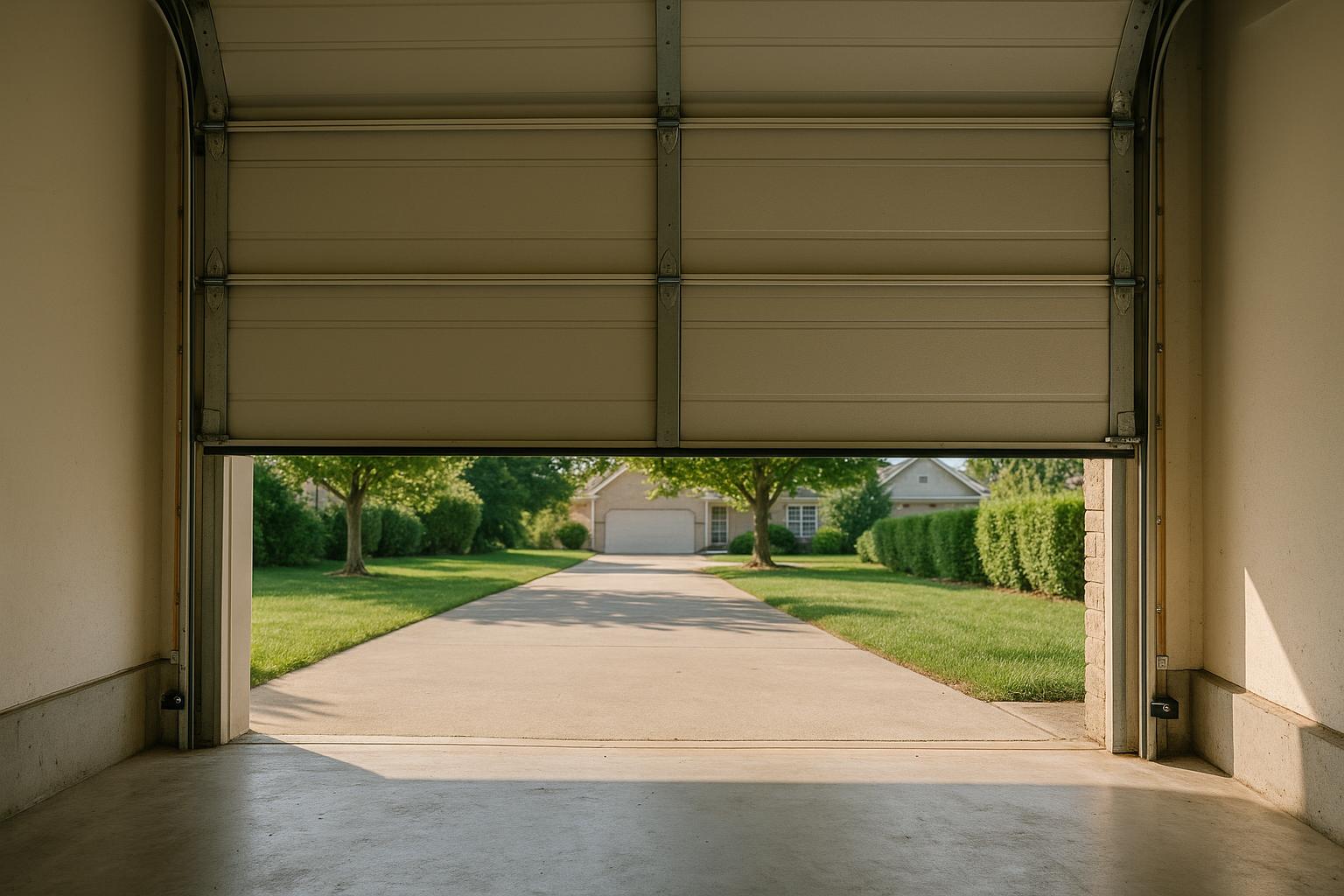
That Frustrating Moment When Your Garage Door Won't Stay Closed
You press the button on your remote, the garage door starts its descent, and then — just before it reaches the floor — it reverses and goes right back up. You try again. Same thing. Maybe it works on the third attempt, or maybe it doesn't work at all.
This is one of the most common garage door complaints we hear from homeowners in Fox Lake, and it's more than just an annoyance. A garage door that won't fully close is a security risk, an energy efficiency problem, and an open invitation for pests, rain, and cold air to enter your home. The good news is that the cause is usually identifiable and fixable.
Let's walk through the most likely reasons your garage door reverses before hitting the floor and what you can do about each one.
1. Misaligned Safety Sensors
This is the number one cause of a garage door that reverses before closing completely. Every garage door opener manufactured after 1993 is required to have photo-eye safety sensors mounted near the bottom of the door tracks on each side. These sensors send an invisible beam across the opening. If anything breaks that beam — a child, a pet, a bicycle — the door automatically reverses to prevent injury or damage.
The problem is that these sensors can become misaligned over time. A bump from a lawnmower, a kid's basketball, or even subtle vibrations from daily use can knock one sensor out of alignment. When the sensors can't communicate properly, the opener interprets it as an obstruction and reverses the door.
What to Check
- Look at the LED lights on each sensor. Most models show a steady green light on the sending sensor and a steady green or amber light on the receiving sensor. If one is blinking, it's likely misaligned.
- Make sure nothing is physically blocking the sensors — cobwebs, dirt, leaves, or debris can interfere with the beam.
- Gently adjust the sensor that's blinking until the light becomes steady.
If you've cleaned and adjusted the sensors and the problem persists, the wiring may be damaged or the sensors themselves may need replacement. This is a quick fix for a professional technician.
2. The Close-Limit Switch Needs Adjustment
Your garage door opener has settings called limit switches that tell the motor how far the door should travel in both the open and close directions. If the close-limit switch is set incorrectly, the opener may think the door has hit an obstruction when it's actually just reaching the floor.
Essentially, the opener is programmed to travel a certain distance. If that distance is set too far, the door pushes against the floor and the opener's built-in force protection kicks in, reversing the door to prevent damage.
What to Check
- Consult your opener's manual for instructions on adjusting the close-limit switch. On most models, it's a small screw or dial on the back or side of the motor unit.
- Make small adjustments — usually a quarter turn at a time — and test the door after each change.
- The goal is for the door to close completely and the motor to stop without the door pushing too hard against the floor.
If you're not comfortable making this adjustment yourself, it's a routine service call that any experienced garage door technician can handle in minutes.
3. Worn or Damaged Rollers and Tracks
Your garage door rides along metal tracks on rollers. When those rollers wear out, crack, or become clogged with grime, they create resistance. The same goes for tracks that are bent, dented, or misaligned. When the opener encounters too much resistance during closing, it may interpret it as an obstruction and reverse.
Here in Fox Lake, our harsh winters can make this worse. Temperature swings cause metal tracks to expand and contract, and road salt and moisture can accelerate corrosion on hardware that isn't properly maintained.
What to Check
- Visually inspect the tracks for obvious bends, dents, or gaps where the track sections meet.
- Look at the rollers — if they're cracked, chipped, or no longer spinning freely, they need replacement.
- Listen for grinding, scraping, or squealing noises during operation, which indicate friction problems.
Track and roller issues are best handled by a professional because attempting to bend tracks back into place without proper tools can make the problem worse or create a safety hazard.
4. Broken or Weakening Torsion Springs
Torsion springs do the heavy lifting — literally. They counterbalance the weight of the door so the opener doesn't have to work as hard. When a spring weakens or breaks, the door becomes significantly heavier for the opener to move. The opener may struggle to hold the door's weight during closing and reverse as a safety precaution.
If your door seems sluggish, slams down faster than usual, or you notice a gap in one of the springs above the door, spring replacement is likely needed. This is not a DIY job. Torsion springs are under extreme tension and can cause serious injury if handled improperly. Always call a trained technician for spring work.
5. The Opener's Force Settings Are Too Low
In addition to limit switches, most garage door openers have force adjustment settings that control how much power the motor uses to open and close the door. If the closing force is set too low, the opener may not have enough power to push the door all the way down, especially if there's even slight resistance from weather seals, minor track friction, or a heavy door.
What to Check
- Your opener manual will show you where the force adjustment dials or screws are located.
- Increase the closing force in small increments and test the door each time.
- Be careful not to set the force too high — the auto-reverse safety feature needs to function properly to protect people and objects.
6. Weather Seal or Threshold Interference
Sometimes the answer is simpler than you'd expect. The rubber weather seal along the bottom of your garage door can become stiff, warped, or swollen over time, especially after the freeze-thaw cycles we experience in the Fox Lake area throughout winter and early spring. A deformed weather seal can catch on the garage floor or threshold, creating just enough resistance to trigger the auto-reverse.
Inspect the bottom seal for cracks, stiffness, or uneven sections. Replacing a worn weather seal is inexpensive and can solve the problem immediately while also improving your garage's insulation.
When to Call a Professional
Some of these fixes — cleaning sensors, checking for obstructions, or replacing a weather seal — are reasonable for a handy homeowner to tackle. But if you've gone through the basics and your garage door still won't close properly, it's time to call in a professional.
Issues involving springs, tracks, openers, and wiring carry real safety risks and require proper tools and training. At Fox Lake Garage Door, we diagnose and repair these problems every day for homeowners across Fox Lake, Round Lake, Ingleside, and the surrounding communities. We'll identify the root cause, explain your options, and get your door working reliably again.
Don't Ignore a Door That Won't Close
A reversing garage door isn't just inconvenient — it compromises your home's security, energy efficiency, and protection from the elements. The longer you wait, the more likely a small issue becomes a bigger and more expensive repair.
If your garage door keeps reversing and you can't pinpoint the cause, give us a call. We offer prompt, honest service and we'll make sure your door closes the way it should — every single time.